



About Johns Hopkins
Johns Hopkins University

Recent news from The Johns Hopkins University

This section contains regularly updated highlights of the news from around The Johns Hopkins University. Links to the complete news reports from the nine schools, the Applied Physics Laboratory and other centers and institutes are to the left, as are links to help news media contact the Johns Hopkins communications offices.


Researchers Explain Magnetic Field Misbehavior in Solar Flares: The Culprit is Turbulence

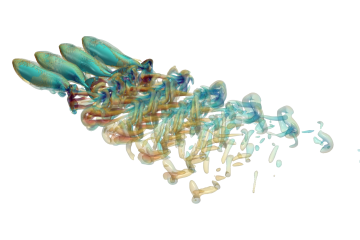
When a solar flare filled with charged particles erupts from the sun, its magnetic fields sometime break a widely accepted rule of physics. The flux-freezing theorem dictates that the magnetic lines of force should flow away in lock-step with the particles, whole and unbroken. Instead, the lines sometimes break apart and quickly reconnect in a way that has mystified astrophysicists. But in a paper published in the May 23 issue of the journal Nature, an interdisciplinary research team led by a Johns Hopkins mathematical physicist says it has found a key to the mystery.

New ‘Out of This World’ Space Stethoscope Valuable Here on Earth, Too

A team of students at the Johns Hopkins University’s Whiting School of Engineering has designed for NASA a new stethoscope that delivers accurate heart- and body-sounds to medics who are trying to assess astronauts’ health on long missions in noisy spacecraft.

Undergrads Adapt Video Game Unit to Help Save Kids Trapped In Overheated Cars

It’s a parent’s worst nightmare: a young child is accidentally left in a locked car on a warm and sunny day. The closed windows turn the car into a greenhouse, and the child dies of heatstroke. In a key first step toward preventing such tragedies, three undergraduate engineering students at Johns Hopkins have turned technology from a popular video game player into a detector for children left behind in dangerously overheated vehicles.

Media Advisory: 36 Baltimore City School Teams to Compete in Robotics Contest at Johns Hopkins

More than 100 Baltimore City Public middle and high school students will compete in the Hopkins Robotics Cup, the first Baltimore City VEX Robotics Championship, from 9 a.m. to 5 p.m. on Saturday, May 4, in the Newton White Athletic Center on The Johns Hopkins University’s Homewood campus.

WEEKEND MEDIA ADVISORY: Robots That Dance—and Find ‘Tumors’

More than a dozen student teams from the Baltimore area will bring small autonomous robots to compete in various events during the competition, organized by Johns Hopkins graduate students from the university’s Laboratory for Computational Sensing and Robotics. Contest events include slalom racing, mystery maze navigation, “tumor” detection, robot dancing and innovative use.

Johns Hopkins Team Deploys Hundreds of Tiny Untethered Surgical Tools in First Animal Biopsies

By using swarms of untethered grippers, each as small as a speck of dust, Johns Hopkins engineers and physicians say they have devised a new way to perform biopsies that could provide a more effective way to access narrow conduits in the body as well as find early signs of cancer or other diseases. In two recent peer-reviewed journal articles, the team reported successful animal testing of the tiny tools, which require no batteries, wires or tethers as they seize internal tissue samples.

Turning Algae into Clean Energy and Fish Food; Helping Africans to Irrigate Crops

Could algae that feast on wastewater produce clean bio-fuels and a healthful supply of fish food? Can impoverished African community gardeners learn to use and maintain a simple centuries-old, non-electric water pump to grow more vegetables? Two Johns Hopkins student teams are working hard to move these “green” ideas off the drawing board and into the real world. Both teams will showcase their progress at the 2013 National Sustainable Design Expo, scheduled April 18 and 19, in Washington, D.C. The event, which will be open to the public on the National Mall, is sponsored by the U.S. Environmental Protection Agency

Low-Cost ‘Cooling Cure’ Could Avert Brain Damage in Oxygen-Starved Babies

When babies are deprived of oxygen before birth, brain damage and disorders such as cerebral palsy can occur. Extended cooling can prevent brain injuries, but this treatment is not always available in developing nations where advanced medical care is scarce. To address this need, Johns Hopkins undergraduates have devised a low-tech $40 unit to provide protective cooling in the absence of modern hospital equipment that can cost $12,000.

Computer Model May Help Athletes and Soldiers Avoid Brain Damage and Concussions

Concussions can occur in sports and in combat, but health experts do not know precisely which jolts, collisions and awkward head movements during these activities pose the greatest risks to the brain. To find out, Johns Hopkins engineers have developed a powerful new computer-based process that helps identify the dangerous conditions that lead to concussion-related brain injuries. This approach could lead to new medical treatment options and some sports rule changes to reduce brain trauma among players.

Cancer-Fighting Nanostructures Concept Earns CAREER Award for Johns Hopkins Engineer

A Johns Hopkins engineer who is designing cancer-fighting nano-size structures that could assemble themselves and deliver treatment to diseased tissue has received a Faculty Early Career Development (CAREER) Award from the National Science Foundation. Honggang Cui, an assistant professor in the Department of Chemical and Biomolecular Engineering at Johns Hopkins, has been given this honor, which is accompanied by nearly $500,000 that will be disbursed over five years.

Johns Hopkins Astrophysicists Join Space Mission Aimed at Solving ‘Dark’ Mysteries of the Universe

Johns Hopkins astrophysicists Brice Ménard and Charles L. Bennett have been appointed to the Euclid Consortium, the international team of scientists overseeing an ambitious space telescope project designed to probe the mysteries of dark energy and dark matter. NASA, a partner in the mission, recently announced their selection to the research team for Euclid.

Johns Hopkins Engineer Mark Foster Wins NSF CAREER Award

A Johns Hopkins engineer who is developing a high-speed imaging system designed to enable researchers to continuously record images at a rate of more than 100 million frames per second – 100 times more rapidly than current technology allows – has been awarded the National Science Foundation’s prestigious Faculty Early Career Development (CAREER) Award, a five-year, $400,000 grant.

MEDIA ADVISORY: Johns Hopkins Computer Security Expert Available for Interviews on Hacker Attacks Targeting The New York Times

Following the disclosure by the New York Times, the publishers of the Wall Street Journal reported that the Journal’s computer systems also had been infiltrated by Chinese hackers, apparently to monitor its China coverage. Available for interviews on this topic is Avi Rubin, a professor of computer science in The Johns Hopkins University’s Whiting School of Engineering and technical director of the university’s Information Security Institute.

Using Twitter to Track the Flu: Researchers Find a Better Way to Screen the Tweets

Sifting through social media messages has become a popular way to track when and where flu cases occur, but a key hurdle hampers the process: how to identify flu-infection tweets. Some tweets are posted by people who have been sick with the virus, while others come from folks who are merely talking about the illness. If you are tracking actual flu cases, such conversations about the flu in general can skew the results. To address this problem, Johns Hopkins computer scientists and researchers in the School of Medicine have developed a new tweet-screening method that not only delivers real-time data on flu cases, but also filters out online chatter that is not linked to actual flu infections.

Engineering Researcher Thao ‘Vicky’ Nguyen Receives NSF CAREER Award

A Johns Hopkins faculty member who is studying how mechanical forces affect soft tissue within the eye has been named a 2013 recipient of a National Science Foundation CAREER Award. The award to Thao “Vicky” Nguyen, an assistant professor of mechanical engineering, will support research that may shed light on diseases and conditions such as tendon injuries, cardiac fibrosis and glaucoma.

Maryland Innovation Initiative Invests in Johns Hopkins Biomedical Projects

A Maryland corporation established to help accelerate the commercialization of new technologies has awarded nearly $300,000 to three Johns Hopkins-related projects that hold promise for ushering new medical devices to the marketplace.

Steering Stem Cells to Become Two Different Building Blocks for New Blood Vessels

Growing new blood vessels in the lab is a tough challenge, but a Johns Hopkins engineering team has solved a major stumbling block: how to prod stem cells to become two different types of tissue that are needed to build tiny networks of veins and arteries. The team’s solution is detailed in an article appearing in the journal Cardiovascular Research. The work is important because networks of new blood vessels, assembled in the lab for transplanting into patients, could be a boon to people whose circulatory systems have been damaged by heart disease, diabetes and other illnesses.

High-Tech Teamwork: Scientists Seek Smoother Partnership Between Humans and Robots

Harmony in the workplace is highly desirable, but what happens when some workers depend on biological brains, while others need computers to guide their behavior? With an eye toward enhanced safety and greater productivity, Johns Hopkins engineers have joined colleagues at four other universities in a project to create new ways for humans and robots to work together cooperatively.

Student Engineers at Johns Hopkins Cook Up Devices for Better Cooking

Recipes can be rather imprecise: a dab of butter, a pinch of salt. But Johns Hopkins engineering students recently learned that maintaining rigid control of cooking temperatures, with less than 1 degree of wiggle-room, can lead to much tastier meals. Oddly enough, their cooking experiments occurred in an undergraduate course called Robot Sensors and Actuators.

MEDIA ADVISORY: Only Mousetraps and Rubber Bands Will Power Student Devices in ‘Cable Car’ Contest

In this competition involving freshman engineers’ inventions, batteries are NOT required – or even allowed. For a class assignment, 67 students from an introductory mechanical engineering course have built aerial vehicles that must move across elevated cables and drop a “payload” onto a bull’s-eye target five feet below. The challenge: these cable cars can possess no motors or batteries. All movement must come from mousetraps and rubber bands.

‘Future of Suture’ Device Wins $12,500 Inventors Prize for Johns Hopkins Students

For devising a disposable suturing tool to guide the placement of stitches and guard against the accidental puncture of internal organs, an undergraduate biomedical engineering team from Johns Hopkins won the $12,500 first-prize Tuesday in the 2012 Collegiate Inventors Competition.

Plan to Turn Farm Waste into Paper Earns $15,000 Prize for Johns Hopkins Students

Three Johns Hopkins engineering students have won a $15,000 prize in a national sustainable development competition for adapting a traditional Korean paper-making technique into an inexpensive way for impoverished villagers to produce paper for schools.

Collecting Cancer Data in the ‘Cloud’ Could Lead to More Effective Treatment

Storing music and photos on distant computers via “cloud” technology is nothing new. But Johns Hopkins researchers are now using this tactic to collect detailed information from thousands of cancer cell samples. The goal is to help doctors make better predictions about how a patient’s illness will progress and what type of treatment will be most effective.

Computational Medicine Begins to Enhance the Way Doctors Detect and Treat Disease

Computational medicine, a fast-growing method of using computer models and sophisticated software to figure out how disease develops–and how to thwart it–has begun to leap off the drawing board and land in the hands of doctors who treat patients for heart ailments, cancer and other illnesses. Using digital tools, researchers have begun to use experimental and clinical data to build models that can unravel complex medical mysteries. These are some of the conclusions of a new review of the field, written by four Johns Hopkins professors affiliated with the university’s Institute for Computational Medicine.

Scientists Discover That Shape Matters in DNA Nanoparticle Therapy

Researchers from Johns Hopkins and Northwestern universities have discovered how to control the shape of nanoparticles that move DNA through the body and have shown that the shapes of these carriers may make a big difference in how well they work in treating cancer and other diseases.

events calendar
click to view events calendar
browse Johns Hopkins A-Z
click to browse
on the web
  • click for hopkins on Facebook
  • click for hopkins on Twitter
  • click for hopkins on YouTube
  • click for hopkins music