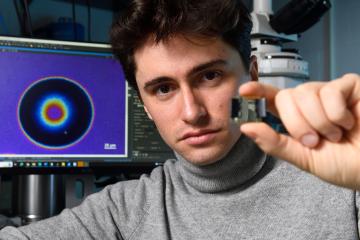


When babies are deprived of oxygen before birth, brain damage and disorders such as cerebral palsy can occur. Extended cooling can prevent brain injuries, but this treatment is not always available in developing nations where advanced medical care is scarce. To address this need, Johns Hopkins undergraduates have devised a low-tech $40 unit to provide protective cooling in the absence of modern hospital equipment that can cost $12,000.
Recent news from The Johns Hopkins University
This section contains regularly updated highlights of the news from around The Johns Hopkins University. Links to the complete news reports from the nine schools, the Applied Physics Laboratory and other centers and institutes are to the left, as are links to help news media contact the Johns Hopkins communications offices.
‘Future of Suture’ Device Wins $12,500 Inventors Prize for Johns Hopkins Students
For devising a disposable suturing tool to guide the placement of stitches and guard against the accidental puncture of internal organs, an undergraduate biomedical engineering team from Johns Hopkins won the $12,500 first-prize Tuesday in the 2012 Collegiate Inventors Competition.
Computational Medicine Begins to Enhance the Way Doctors Detect and Treat Disease
Computational medicine, a fast-growing method of using computer models and sophisticated software to figure out how disease develops–and how to thwart it–has begun to leap off the drawing board and land in the hands of doctors who treat patients for heart ailments, cancer and other illnesses. Using digital tools, researchers have begun to use experimental and clinical data to build models that can unravel complex medical mysteries. These are some of the conclusions of a new review of the field, written by four Johns Hopkins professors affiliated with the university’s Institute for Computational Medicine.
Undergraduates’ Cellphone Screening Device for Anemia Wins $250,000 Prize
Could a low-cost screening device connected to a cellphone save thousands of women and children from anemia-related deaths and disabilities? That’s the goal of Johns Hopkins biomedical engineering undergraduates who say they’ve developed a noninvasive way to identify women with this dangerous blood disorder in developing nations.
New Early Warning System for Seizures Could Lead to Fewer False Alarms
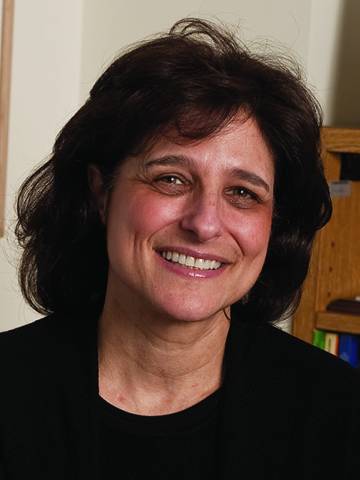
Srivdevi Sarma, a Johns Hopkins biomedical engineer, has devised new seizure detection software that, in early testing, significantly cuts the number of unneeded pulses of current that epilepsy patients would receive from new brain implants devices.
Coulter Grant Will Help Johns Hopkins Make New Devices to Improve Patient Care
The Johns Hopkins Department of Biomedical Engineering has received a Coulter Foundation Translational Partnership Award that will result in $5 million in funding over the next five years to speed the movement of new medical devices out of the university’s labs and into hospitals and doctor’s offices.
Screening Tests for Pregnant Women Win Global Health Prize for Johns Hopkins Students
A team of Johns Hopkins graduate students who developed a low-cost health kit designed to screen pregnant women in developing countries for life-threatening conditions won the grand prize this week in an international competition seeking ways to improve maternal health.
‘Intelligent’ Surgical Drill Wins Third-Place Prize for Johns Hopkins Student Inventors
An “intelligent” drill developed by Johns Hopkins students to improve orthopedic surgical procedures was awarded third-place honors in the undergraduate division of the 2010 Collegiate Inventors Competition. The team received $2,500 in prize money for its entry, which was among five finalist projects competing Oct. 27 at a Washington, D.C., ceremony.