
Recent news from The Johns Hopkins University
This section contains regularly updated highlights of the news from around The Johns Hopkins
University. Links to the complete news reports from the nine schools,
the Applied Physics Laboratory and other centers and institutes are to
the left, as are links to help news media contact the Johns Hopkins
communications offices.
With the combined power of NASA’s Spitzer and Hubble Space Telescopes as well as a cosmic magnification effect, a team of astronomers led by Wei Zheng of The Johns Hopkins University has spotted what could be the most distant galaxy ever seen. Light of the young galaxy captured by the orbiting observatories shone forth when the 13.7-billion-year-old universe was just 500 million years old. The far-off galaxy existed within an important era when the universe began to transit from the so-called “Dark Ages.” During this period, the universe went from a dark, starless expanse to a recognizable cosmos full of galaxies. The discovery of the faint, small galaxy accordingly opens up a window into the deepest, remotest epochs of cosmic history.
“This galaxy is the most distant object we have ever observed with high confidence,” said Zheng, a principal research scientist in The Henry A. Rowland Department of Physics and Astronomy at Johns Hopkins’ Krieger School of Arts and Sciences and lead author of a new paper appearing in Nature tomorrow. “Future work involving this galaxy – as well as others like it that we hope to find – will allow us to study the universe’s earliest objects and how the Dark Ages ended.”
September 19, 2012 Tags: California Institute of Technology, CLASH, Cluster Lensing and Supernova Survey, gravitational lensing, Henry A. Rowland Department of Physics and Astronomy, Holland Ford, Hubble Space Telescope, Infrared Array Camera, IRAC, Jet Propulsion Laboratory, Krieger School of Arts and Sciences, most distant galaxy, Spitzer Space Telescope, Wie Zheng
| Category: Academic Disciplines, Homewood Campus News, Physics and Astronomy, University-Related
A team of Johns Hopkins astrophysicists using NASA’s Hubble Space Telescope has detected a distant Type Ia supernova, the farthest stellar explosion that can be used to measure the expansion rate of the universe. The supernova is the remnant of a star that exploded 9 billion years ago.
January 11, 2012 Tags: Adam Riess, astronomy, astrophysics, Hubble Space Telescope, Space Telescope Science Institute, supernovae
| Category: Physics and Astronomy, Technology
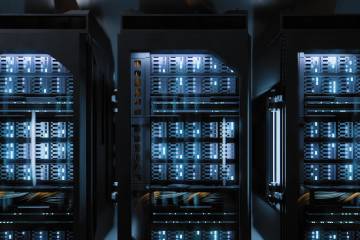
Imagine a tool that is a cross between a powerful electron microscope and the Hubble Space Telescope, allowing scientists from disciplines ranging from medicine and genetics to astrophysics, environmental science, oceanography and bioinformatics to examine and analyze enormous amounts of data from both “little picture” and “big picture” perspectives.Using a $2.1 million grant from the National Science Foundation, a group led by computer scientist and astrophysicist Alexander Szalay of Johns Hopkins’ Institute for Data Intensive Engineering and Science is designing and developing such a tool, dubbed the Data-Scope.
November 1, 2010 Tags: Alexander Szalay, Andreas Terzis, Bloomberg School of Public Health, Data-Scope, Department of Computer Science, electron microscope, Far Ultraviolet Spectroscopic, federal stimulus grant, federal stimulus money, high-performance computing, Hubble Space Telescope, Human Language Technology Center of Excellence, Johns Hopkins' Institute for Data-Intensive Engineering and Science, Jonathan Bagger, Kenneth Church, Krieger School of Arts and Sciences, National Science Foundation, petabyte, Sarah Wheelan, School of Medicine, Scott Zeger, Whiting School of Engineering
| Category: Academic Disciplines, Engineering, Environment, Institutional News, Medicine and Nursing, Natural Sciences, Physics and Astronomy, Psychology, Public Health, Social Sciences, Technology
NASA astronaut John Grunsfeld has walked in space eight times and logged more than 800 hours floating in that deep, dark void over the course of five space flights, including three to service the Hubble Space Telescope. Now, he is about to explore a new frontier: The Johns Hopkins University. On July 1, the man nicknamed “the Hubble Repairman” became a research professor in the Henry A. Rowland Department of Physics and Astronomy at the Krieger School of Arts and Sciences. While at Johns Hopkins, Grunsfeld, who is deputy director at the nearby Space Telescope Science Institute, will continue his research in astrophysics and the development of new technology and systems for space astronomy.
July 8, 2010 Tags: Adler Planetarium, astronaut, Bloomberg Center for Physics and Astronomy, Car Talk, Daniel Reich, Henry A. Rowland Department of Physics and Astronomy, Hubble Space Telescope, Johns Hopkins Applied Physics Laboratory, Johns Hopkins University, Johnson Space Center, Kennedy Space Center, Krieger School of Arts and Sciences, Mir Space Station, Mount McKinley, NASA, National Public Radio, NOVA, PBS, space shuttle, Space Telescope Science Institute, Third Small Astronomy Satellite
| Category: Academic Disciplines, Homewood Campus News, Institutional News, Physics and Astronomy, Uncategorized, University-Related